
WRO® Season Theme – 2026
The World Robot Olympiad (WRO®) is a global stage where students harness the rapidly evolving power of robotics to tackle real-world problems. For the 2026 challenge, we urge participants to look beyond purely technical applications and consider how robotics can become a vital tool to express, preserve, and share the unique heritage, arts, and human stories that form the very foundation of global culture and identity.
Explore WRO® 2026 Rules by Category
Overview
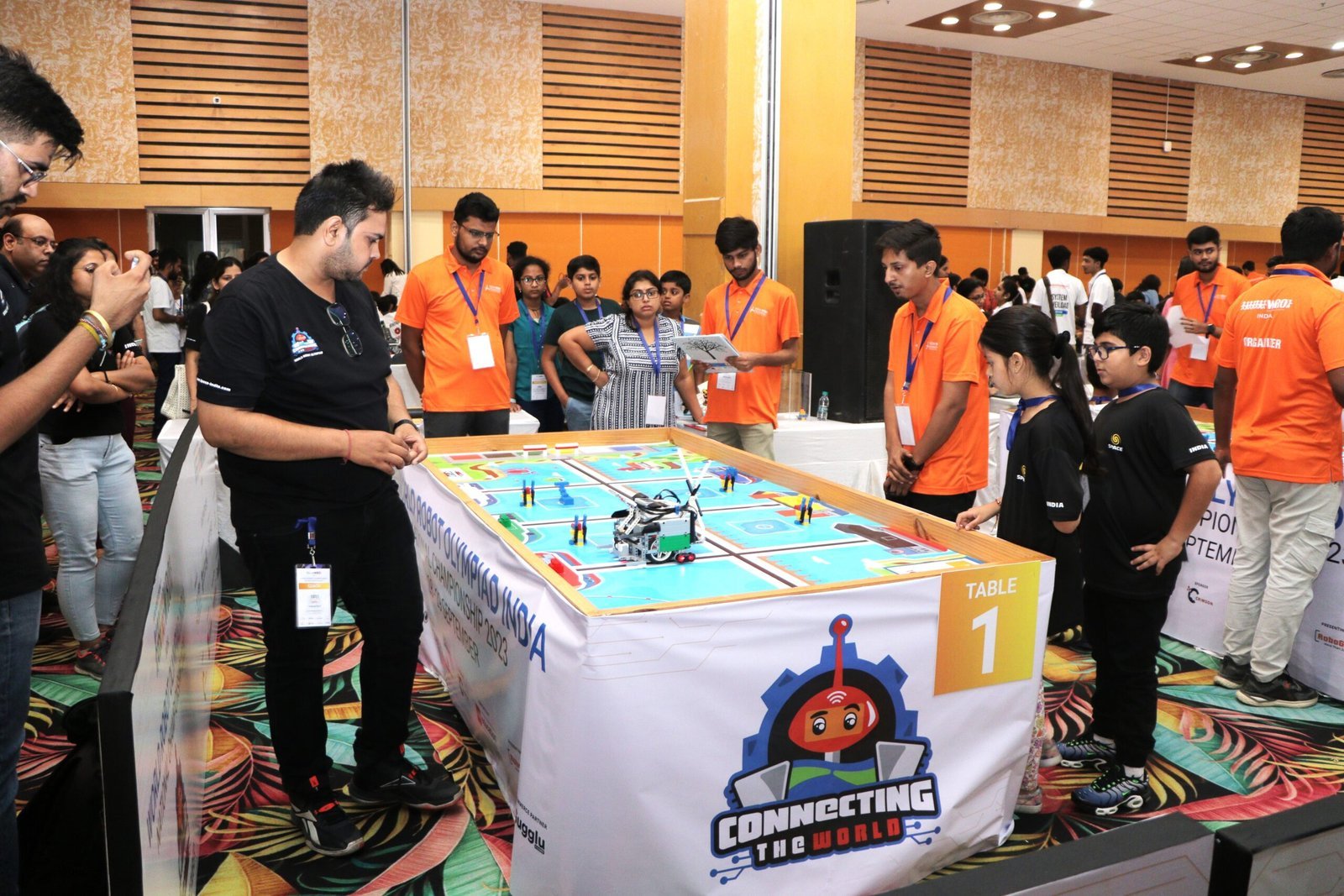
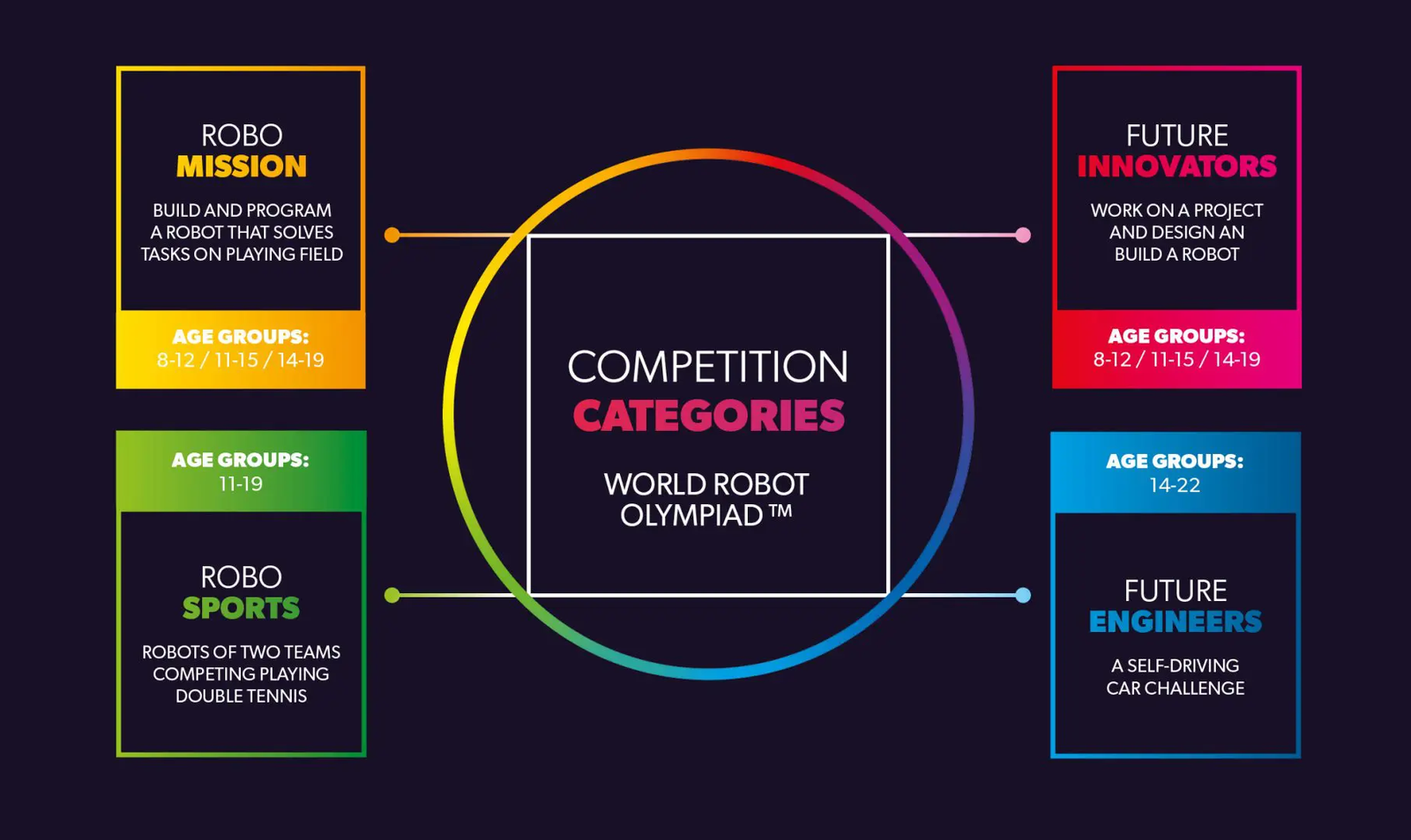
RoboMission is a game-based robotics competition where teams design, build, and program an autonomous robot to solve specific tasks on a competition field. Each season introduces a new theme and challenge, requiring teams to develop strategic solutions within a defined set of rules.
The robot must operate fully autonomously and complete missions during timed runs on a standardized field. Teams are judged based on performance, accuracy, and adherence to competition rules.
Age Group
Elementary (8 -12) | Junior (11 – 15) | Senior (14 – 19)
Learning Focus
-
Engineering design and mechanical construction
-
Programming and algorithm development
-
Sensor integration and autonomous navigation
-
Strategy optimization
-
Team collaboration and problem solving
RoboMission emphasizes hands-on technical skills and real-time performance under competition conditions.

Overview
RoboSports Double Tennis is a dynamic, team-based robotics sport competition. Two autonomous robots per team compete in a tennis-inspired match against another team.
Robots must cooperate, track the ball, and score points while operating fully autonomously. The competition combines robotics, artificial intelligence, and strategic gameplay.
Age Group
11 – 19 years
Learning Focus
-
Multi-robot coordination
-
Real-time object tracking
-
Strategy and AI-based decision making
-
Autonomous movement and positioning
-
Team collaboration under competitive pressure
RoboSports highlights advanced robotics capabilities in a fast-paced, sport-like environment.
Overview
In Future Innovators, teams develop a robotic solution that addresses a real-world problem connected to the season’s theme, often linked to the UN Sustainable Development Goals.
Teams conduct research, design and prototype an innovative robotic system, and present their solution in a project booth. The robot must demonstrate autonomous decision-making and meaningful interaction with its environment.
Judging is based on three main pillars:
-
Project & Innovation
-
Robotic Solution
-
Presentation & Teamwork
Age Group
Elementary (8 -12) | Junior (11 – 15) | Senior (14 – 19)
Learning Focus
-
Research and problem identification
-
Engineering design and prototyping
-
Software development and automation
-
Innovation and social impact analysis
-
Presentation and communication skills
Future Innovators encourages creativity, entrepreneurship thinking, and socially responsible technology development.
Overview
Future Engineers challenges teams to design and build an autonomous self-driving vehicle capable of navigating a dynamically changing race track.
The competition consists of two main challenges:
-
Open Challenge – Complete three autonomous laps on a track with variable wall configurations.
-
Obstacle Challenge – Navigate traffic signs, follow lane rules, complete three laps, and perform parallel parking.
Each round features randomized elements, requiring robust algorithms, sensor fusion, and advanced control strategies.
Teams must also publish their engineering documentation and source code in a public GitHub repository, demonstrating a complete engineering workflow.
Age Group
14 – 22 years
Learning Focus
-
Computer vision and sensor fusion
-
Autonomous navigation and control systems
-
Mechanical vehicle design
-
Software architecture and documentation
-
Engineering process and version control
Future Engineers emphasizes real-world autonomous vehicle principles and professional engineering standards.
RULES
Official rules for the WRO® International Final and the Open Championships